Mobilising research and innovation, the concept of decarbonisation is directly linked to the fight against climate change.
Behind the word decarbonisation, we find all the measures enabling an economic sector, an entity – State, company – to reduce its carbon footprint, that is to say its greenhouse gas emissions, carbon dioxide (CO2) and methane (CH4) primarily, in order to limit the impact on the climate.
The renewable energy solutions MDI Technologies works with include:
The Government’s roadmap is driven by the “National Low-Carbon Strategy”, initiated in 2015 and revised in 2018-2019, which sets out the main guidelines for successfully transitioning to a low-carbon economy.
And, inevitably, the industrial world is called upon to mobilise. To encourage industry players to accelerate their decarbonisation, France has notably released subsidies of almost 3 billion euros as part of the Recovery Plan. This sum supports industrial investments in the areas of energy efficiency or electrification that help reduce greenhouse gas emissions.
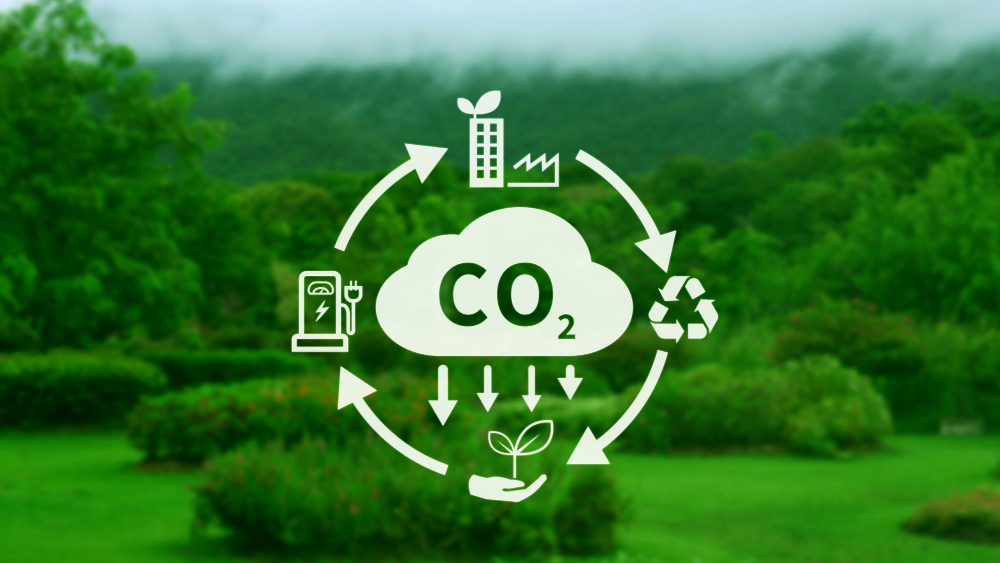
One of the essential levers for successfully decarbonising can be summed up in one formula: consume less and better. How? By aiming for energy efficiency: whether it is the energy used to heat buildings, run industries, or power our cars… By intensifying the approach centred on developing energy sobriety, which consists of reducing energy consumption; By investing in renewable energies, which are more virtuous.
Thus, in the short and medium term, natural gas will replace more polluting fuels such as coal used for electricity production or oil for heating. And in the longer term, it is green gases, biogas or hydrogen – renewable and produced for example from organic waste – that will replace natural gas. By ensuring the preservation of carbon sinks, that is to say natural ecosystems (soils, forests…) that capture carbon, while also developing CO2 capture and storage technologies.
© 2026 MDI Technologies — All rights reserved